Fuel Consumption Calculator — Diesel & Gas (GPH / MPG)
Use this calculator to estimate how much fuel your trucks, generators, heavy equipment, or marine vessels burn per day, month, and year. Pick an equipment type to start with an industry-standard consumption rate, then enter your own mileage or run-hours for a more precise gallons-per-day, gallons-per-month, and gallons-per-year estimate — plus an estimated fuel spend if you enter your price per gallon.
Read the full guide
Fuel Consumption Formulas
Fuel consumption is calculated two ways depending on the type of equipment:
- Road vehicles (miles-based): gallons = miles driven ÷ MPG. Multiply by number of vehicles and operating days per month for fleet totals.
- Stationary and marine equipment (hours-based): gallons = hours run × GPH (gallons per hour). Multiply by number of units and operating days per month for total volume.
Typical Fuel Consumption by Equipment Type
| Equipment | Typical Consumption |
|---|---|
| Semi truck (long-haul, heavy-duty) | ~6.5 MPG diesel |
| Box truck / medium-duty | ~9 MPG diesel |
| Pickup truck / cargo van | ~15 MPG gasoline or diesel |
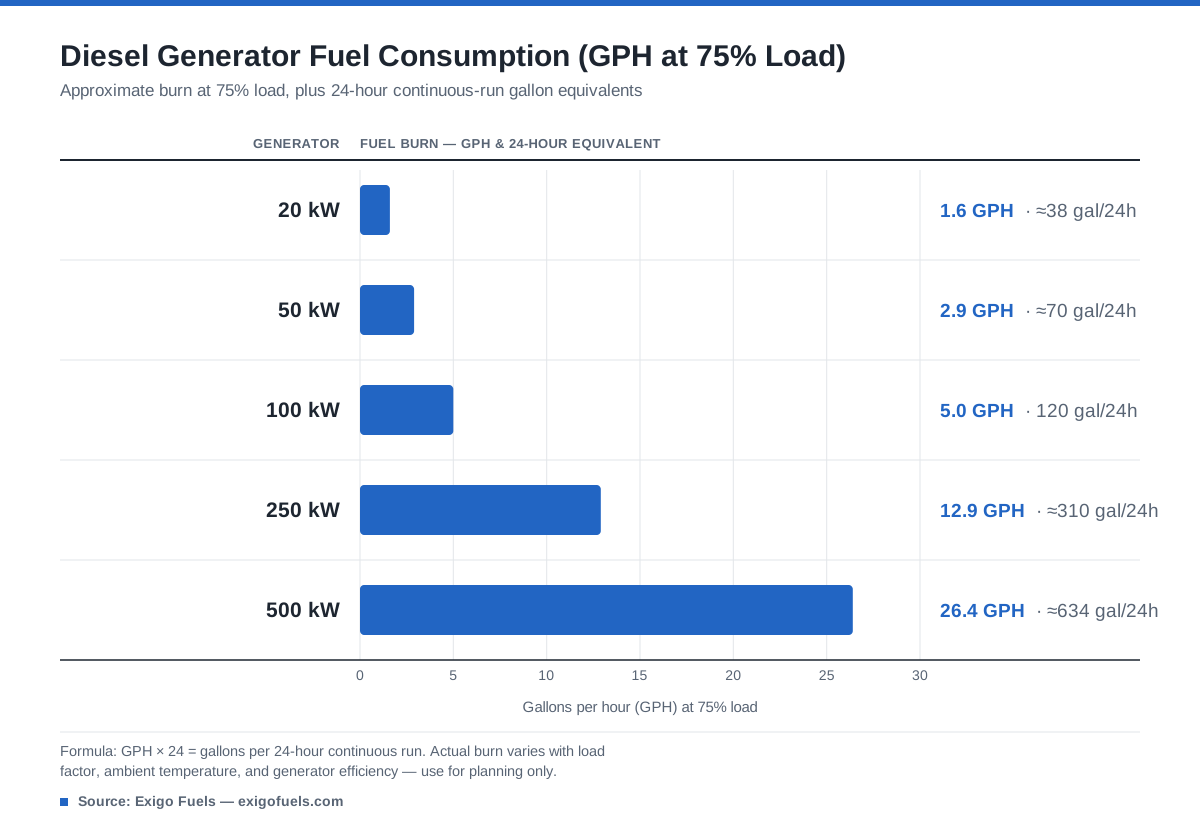
| 20 kW diesel generator | ~1.6 GPH at 75% load |
| 50 kW diesel generator | ~2.9 GPH at 75% load |
| 100 kW diesel generator | ~5.0 GPH at 75% load |
| 250 kW diesel generator | ~12.9 GPH at 75% load |
| 500 kW diesel generator | ~26.4 GPH at 75% load |
| Heavy equipment / excavator | 3-8 GPH (avg ~5 GPH) |
| Marine vessel | Varies by engine — use manufacturer-rated GPH |
See the full diesel generator fuel consumption chart (GPH at 75% load, with 24-hour gallon equivalents by generator size) below.
How to Estimate Consumption by Fleet Type
For a truck fleet, start with your telematics or fuel-card monthly mileage per vehicle and your fleet's average MPG (heavy-duty trucks run 6-7 MPG loaded, medium-duty box trucks run 8-10 MPG, and light-duty pickups or vans run 13-17 MPG). For generators, match your unit's rated kW to the closest row in the table above, or use the GPH figure from your generator's spec sheet at your typical load percentage — fuel burn scales roughly with load, so a generator running at 50% load burns meaningfully less than the 75%-load figures shown here. For heavy equipment such as excavators, loaders, and bulldozers, 3 to 8 GPH is a reasonable planning range depending on machine size and duty cycle; refer to the OEM's fuel consumption chart for your specific model when precision matters. For marine vessels, GPH varies widely by engine displacement, hull type, and cruising speed — use your engine manufacturer's rated GPH at your typical RPM, since there is no single industry-standard figure that fits all vessel types.
When Bulk Fuel Delivery Makes Sense
Once you know your monthly gallon volume, the next question is how to source that fuel most efficiently. Operations consuming roughly 500 gallons per month or more — a mid-sized generator running daily, a handful of heavy-duty trucks, a small excavation fleet, or a cluster of backup generators across a property — are typically strong candidates for on-site bulk fuel delivery instead of retail pump fueling or manual jerry-can refueling. Bulk delivery brings the fuel to your trucks, generators, or job site on a scheduled or on-demand basis, which cuts driver downtime, avoids running dry during a job or an outage, and often unlocks wholesale-based pricing at higher volumes. If you already know roughly how much you spend and want to see the dollar comparison against retail pricing, use our Fuel Cost Savings Calculator. To get a delivered-fuel quote sized to the volume you just calculated, request a quote below or call Exigo Fuels at (305) 900-6725 — or start at our quote page for a full request form.
Frequently Asked Questions
How do you calculate fuel consumption?
For vehicles that travel a distance, fuel consumption in gallons equals miles driven divided by miles per gallon (gal = miles ÷ MPG). For equipment that runs on a time basis — generators, heavy equipment, and marine engines — fuel consumption equals hours run multiplied by the engine's gallons-per-hour rating (gal = hours × GPH). Multiply by the number of units and operating days to get monthly and annual totals.
How many gallons per hour does a diesel generator use?
At roughly 75% load, a 20 kW diesel generator burns about 1.6 GPH, a 50 kW unit about 2.9 GPH, a 100 kW unit about 5.0 GPH, a 250 kW unit about 12.9 GPH, and a 500 kW unit about 26.4 GPH. Actual consumption varies with load factor, ambient temperature, and generator efficiency — lightly loaded generators burn noticeably less per hour, while generators run near 100% load burn more.
How much fuel does a semi truck use per mile?
A loaded semi truck averages around 6 to 6.5 miles per gallon, meaning it burns roughly 0.15 to 0.17 gallons of diesel per mile. Box trucks and medium-duty trucks typically get 8 to 10 MPG (about 0.10 to 0.13 gal/mile), while pickup trucks and cargo vans average 13 to 17 MPG depending on load and terrain.
How do I convert MPG to gallons per month?
Divide your monthly miles by your vehicle's MPG to get monthly gallons (gallons = monthly miles ÷ MPG). For a fleet, multiply that per-vehicle figure by the number of vehicles. The calculator on this page does this automatically — enter miles per day, MPG, number of vehicles, and operating days per month to see your monthly and annual gallon totals.
What's the difference between this and the fuel cost calculator?
This calculator estimates how much fuel you consume — gallons per day, month, and year — based on your mileage or run-hours. Our separate Fuel Cost Savings Calculator estimates how much money you could save by switching from retail pump fueling to on-site bulk delivery, for fleets that already know their consumption. Use this tool first to find your volume, then the savings calculator to see the cost comparison.
What factors affect real-world fuel consumption?
Load factor, terrain, idle time, ambient temperature, engine age and maintenance, and duty cycle all affect real-world fuel burn. A generator running at 50% load burns meaningfully less per hour than one at 100% load; a truck climbing grades or idling in traffic burns more per mile than highway cruising. Treat calculator estimates as a planning baseline and adjust using your own fuel logs when available.